AI concentration cuts double-bagger stocks by 32% as Korea’s rally narrows
Korea’s 2026 stock rally has become narrower. The number of double-bagger stocks, or shares that rose more than 100%, is down 32% from the same period last year. Buying has centered on AI semiconductors, power infrastructure and data-center supply chains, leaving many non-AI sectors behind. Investors now need to weigh earnings visibility, valuation and won-b
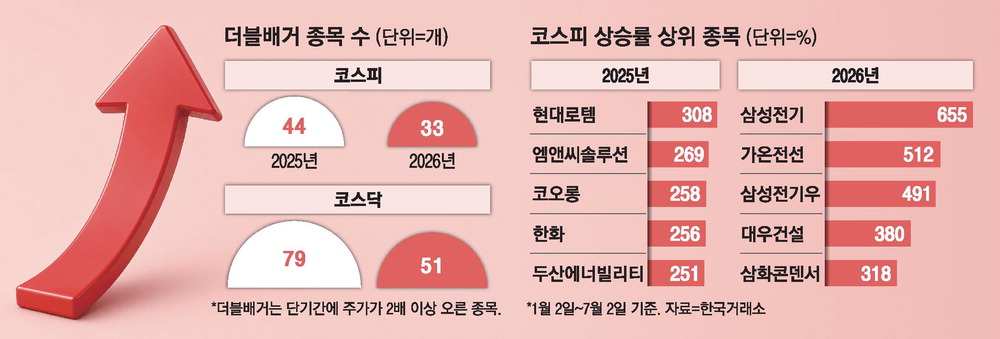
Korea’s stock market has produced fewer double baggers in 2026, even as major indexes have climbed. The number of stocks that more than doubled is 32% lower than a year earlier. That decline signals a narrow rally rather than a broad advance.
AI shares dominate
Buying has focused on AI-linked names, including semiconductors, power infrastructure and data-center supply chains. Consumer, domestic-service and traditional manufacturing shares have lagged as earnings recovery, rates and cost pressure limited upside. Investors outside the AI trade have therefore felt less benefit from the market’s rise.
What it means
A double bagger is a stock that rises more than 100% over a set period. If 100 stocks met the mark at this point last year, roughly 68 do so this year. For Korean investors, won-based returns, foreign flows, disclosures and fair-trading rules matter. The second half will depend on rates, chip demand and whether AI capital spending turns into visible profits.
Key points
- Korea’s 2026 stock rally has become narrower. The number of double-bagger stocks, or shares that rose more than 100%, is down 32% from the same period last year. Buying has centered on AI semiconductors, power infrastructure and data-center supply chains, leaving many non-AI sectors behind. Investors now need to weigh earnings visibility, valuation and won-b
- Use the body and FAQ context before acting on this update.
- Compare with related issues inside the category hub.
FAQ
What is a double-bagger stock?
It is a stock that rises more than 100% over a given period, meaning its price has more than doubled.
Why did Korea’s double-bagger count fall in 2026?
Market gains concentrated in AI-linked semiconductors, power infrastructure and data-center supply chains, while many non-AI sectors lagged.
What should investors watch now?
They should focus on earnings visibility, order backlogs, valuation, won-based cost structures and domestic disclosure or fair-trading risks.
Latest stories
HYBE Sold After 9% Surge as Top Investors Buy Chips and Shipbuilding
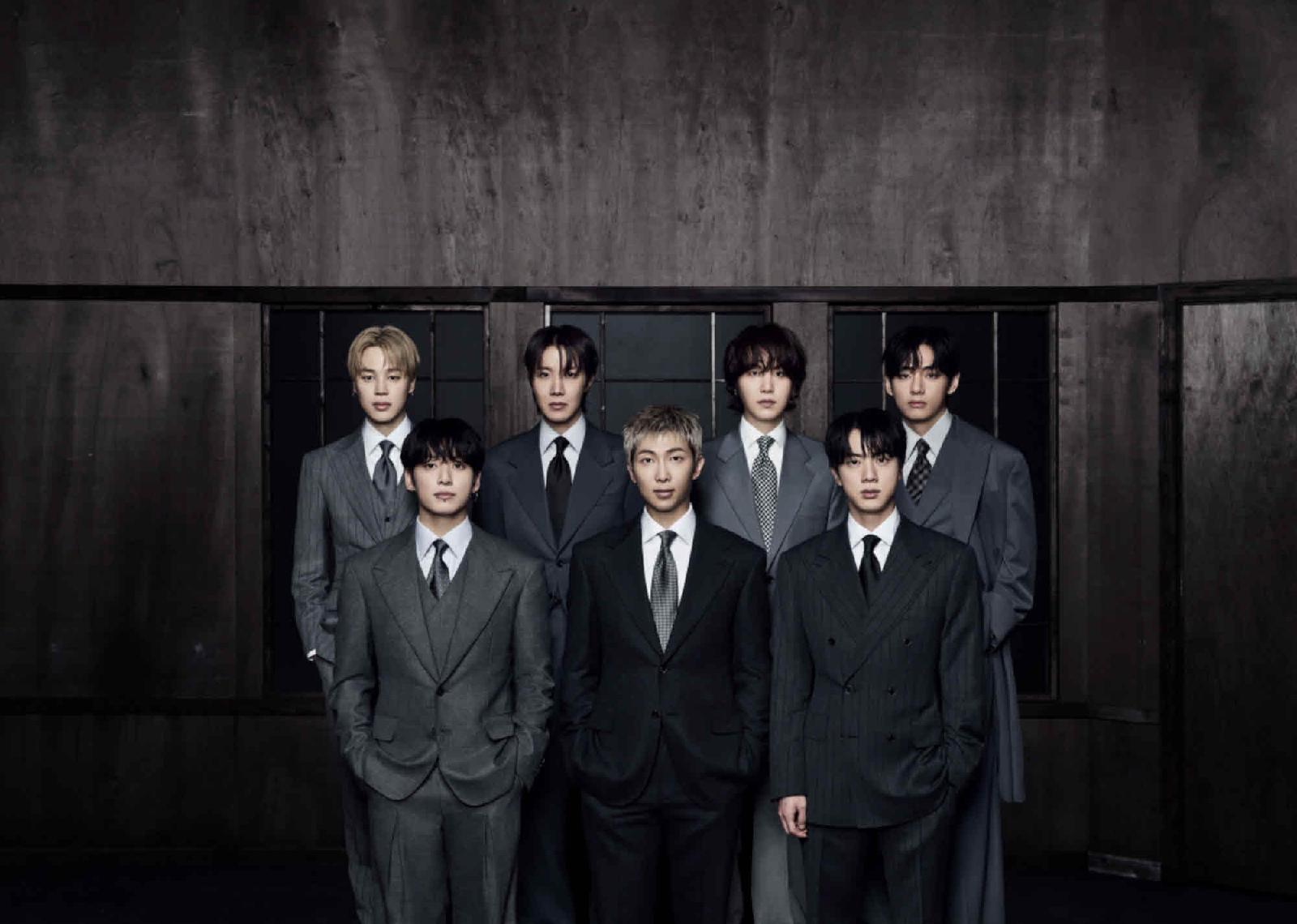
Korea’s top-performing retail investors moved to sell HYBE after its sharp intraday rise on June 29. The flow pointed to profit-taking after a rapid 9% gain. Buying interest centered on Samsung Electronics, SK hynix, SK, and HD Hyundai Heavy Industries. The market preference leaned toward semiconductors and shipbuilding large caps.
National Pension Domestic Stock Return Hits 60% as Fund Gains Reach 208 Trillion Won
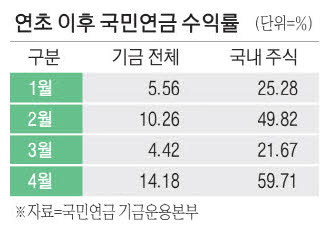
Korea’s National Pension recorded a 14% total return as of the end of April 2026. Domestic equities delivered a 60% return, becoming the main driver of fund performance. Investment gains reached 208 trillion won. The Kospi’s move around 6,600 has become a key factor for pension finances and Korea’s capital market.
Memory ETF Frenzy Rides Samsung and SK Hynix to Outpace Nasdaq-100 QQQ
U.S.-listed memory ETFs have become a major AI infrastructure trade, delivering far stronger short-term performance than Nasdaq-100 ETF QQQ. Samsung Electronics, SK Hynix and Micron sit at the center of the HBM and DRAM supply chain. A leading DRAM ETF moved into the $20 billion asset range within just over two months. The trade offers precision exposure, bu
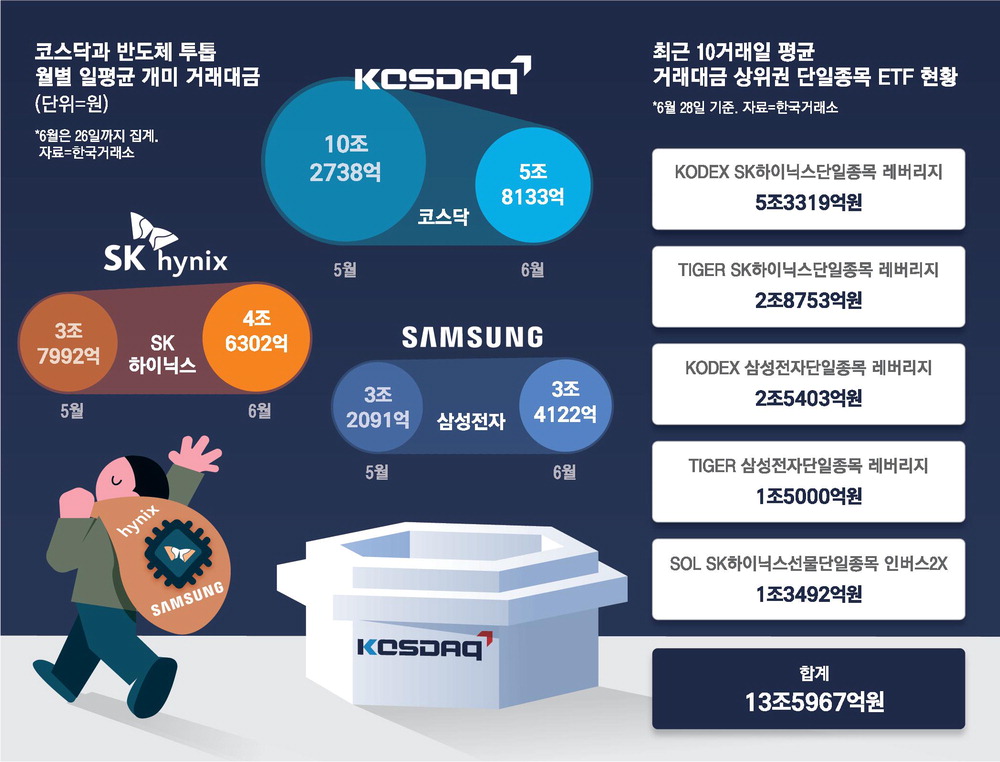
KOSDAQ Reclaims 900 as Samjeon-Nix Leverage Crowding Eases
KOSDAQ regained relevance by moving back above 900. Funds that had been concentrated in Samsung Electronics, SK Hynix and a one-month-old Samjeon-Nix leveraged product spread into growth sectors. The buy-side sidecar showed renewed risk appetite, but leverage mechanics and KOSDAQ volatility remain key investor risks.
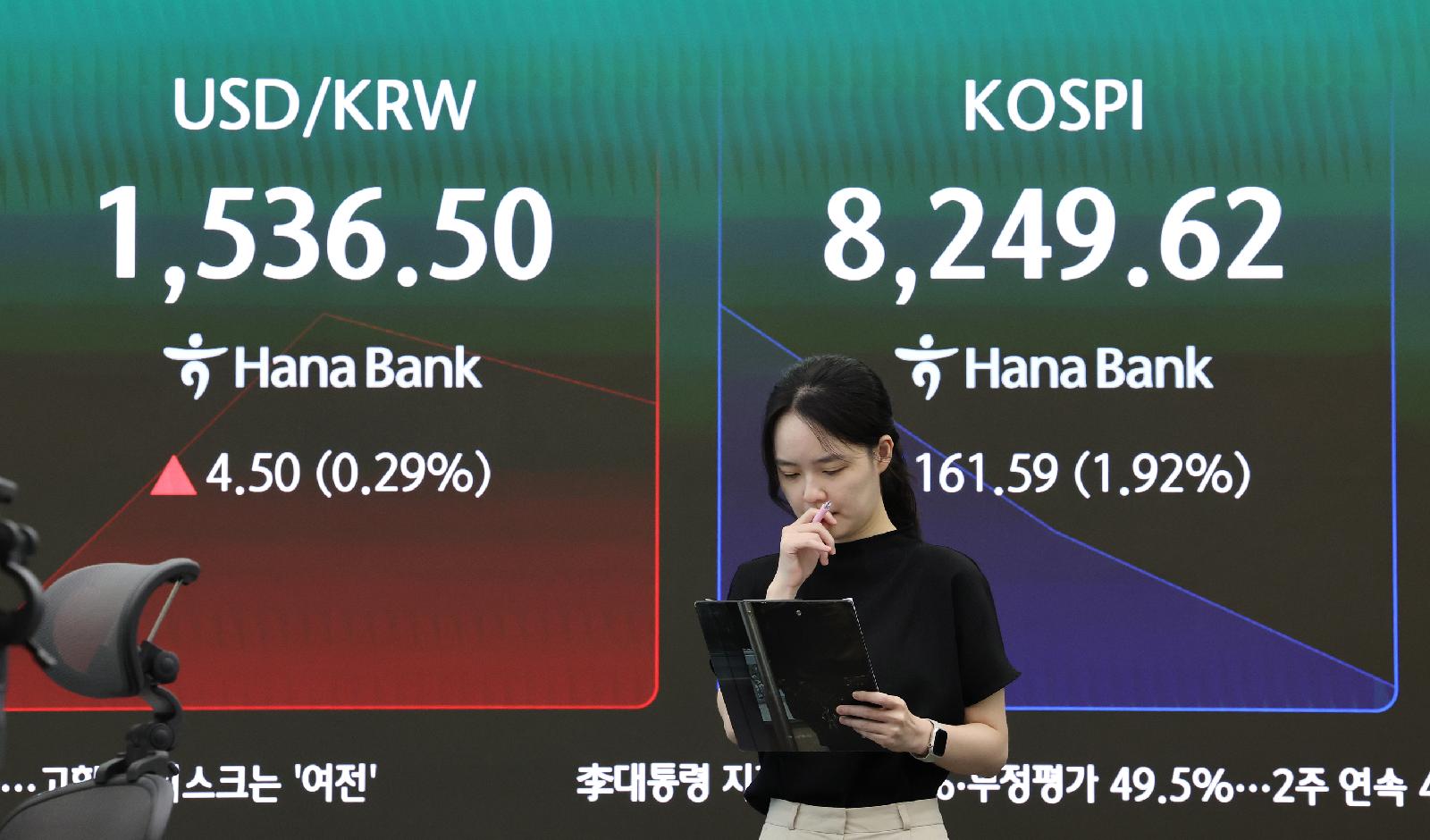
KOSPI Fear Index Near Record High as Middle East Tension Hits Chip Stocks
The KOSPI 200 Volatility Index, known as Korea’s fear index, climbed to a record-level intraday high on the 29th. Rising U.S.-Iran tension weakened risk appetite, while semiconductor shares faced fading investor confidence. The index rose more than 5%, signaling sharper short-term stress in Korean equities.
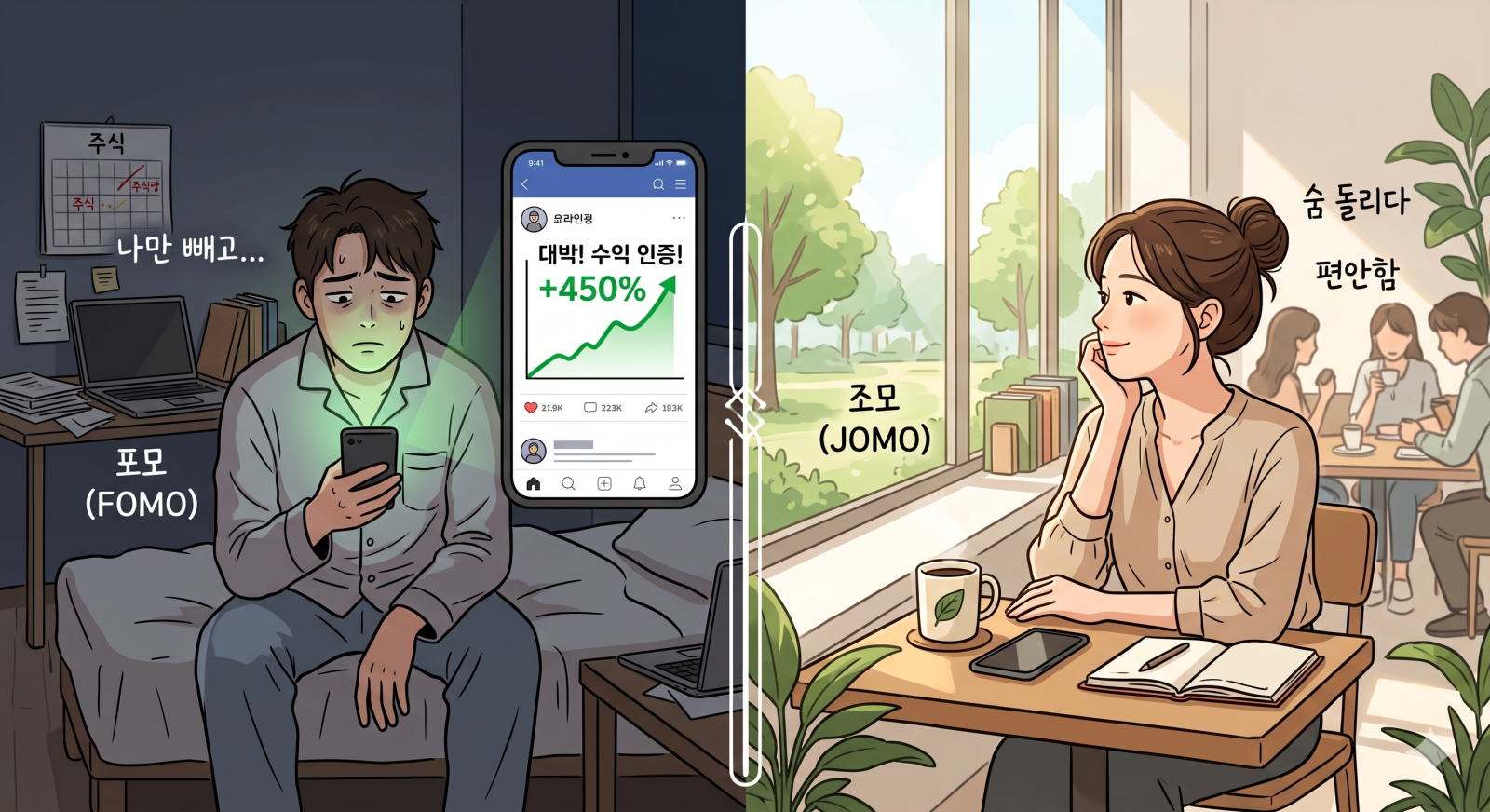
FOMO Fatigue Deepens as Investors Miss Samsung Electronics and SK Hynix Rally
FOMO is spreading as rising stocks, property prices and AI adoption make people feel left behind. Online mentions and searches for FOMO peaked in May 2026 across the period from 2025 to June 2026. As fatigue builds, some investors and workers are using JOMO to reduce comparison-driven anxiety.
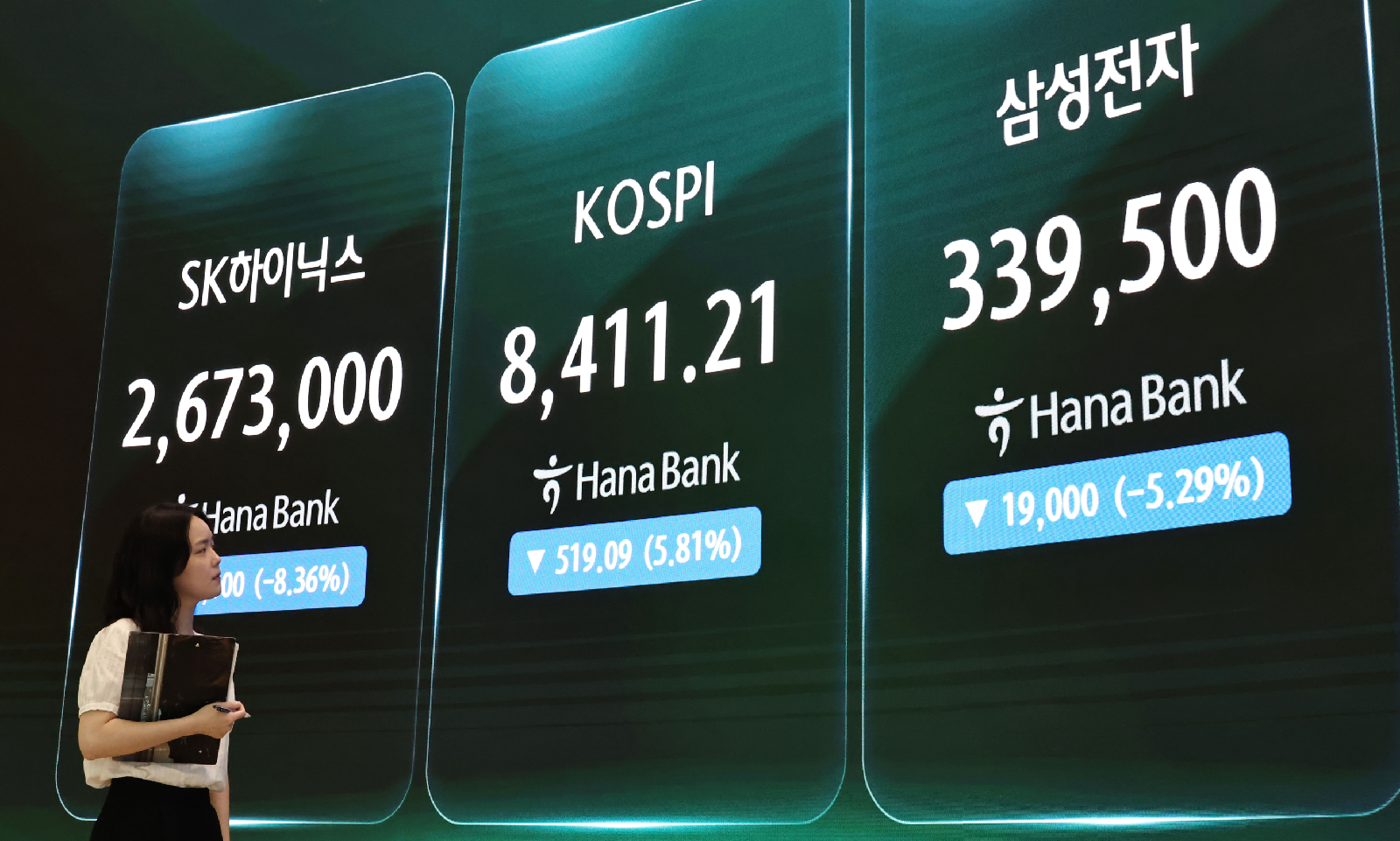
KOSPI’s 9,000 Test Puts Inflation, Jobs, Foreign Selling and AI Costs in Focus
The KOSPI approached 9,000 on June 25, but volatility rose as AI infrastructure costs and foreign selling hit large-cap sentiment. Micron’s strong results supported expectations for Samsung Electronics and memory chips. The week starting June 29 puts inflation, jobs, rates and the won-dollar exchange rate at the center. Investors should watch futures flows,
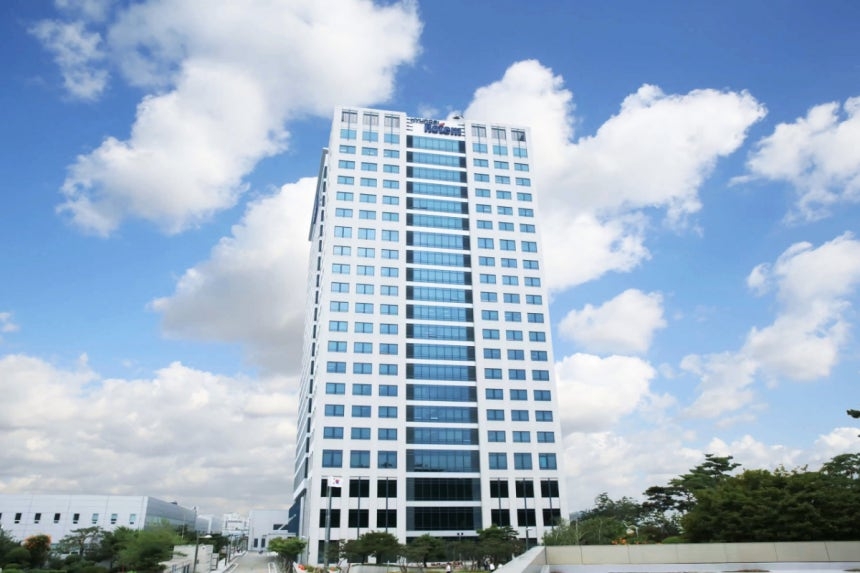
Hyundai Rotem Valuation Lowest Among Korea Defense Five as Q2 Meets Views
Hyundai Rotem is drawing attention for having the lowest relative valuation among Korea’s five leading defense companies. Second-quarter results are expected to match market expectations. The existing target-price reference is 283,000 won, with orders, delivery timing and margins driving the investment case.