KOSPI Fear Index Near Record High as Middle East Tension Hits Chip Stocks
The KOSPI 200 Volatility Index, known as Korea’s fear index, climbed to a record-level intraday high on the 29th. Rising U.S.-Iran tension weakened risk appetite, while semiconductor shares faced fading investor confidence. The index rose more than 5%, signaling sharper short-term stress in Korean equities.
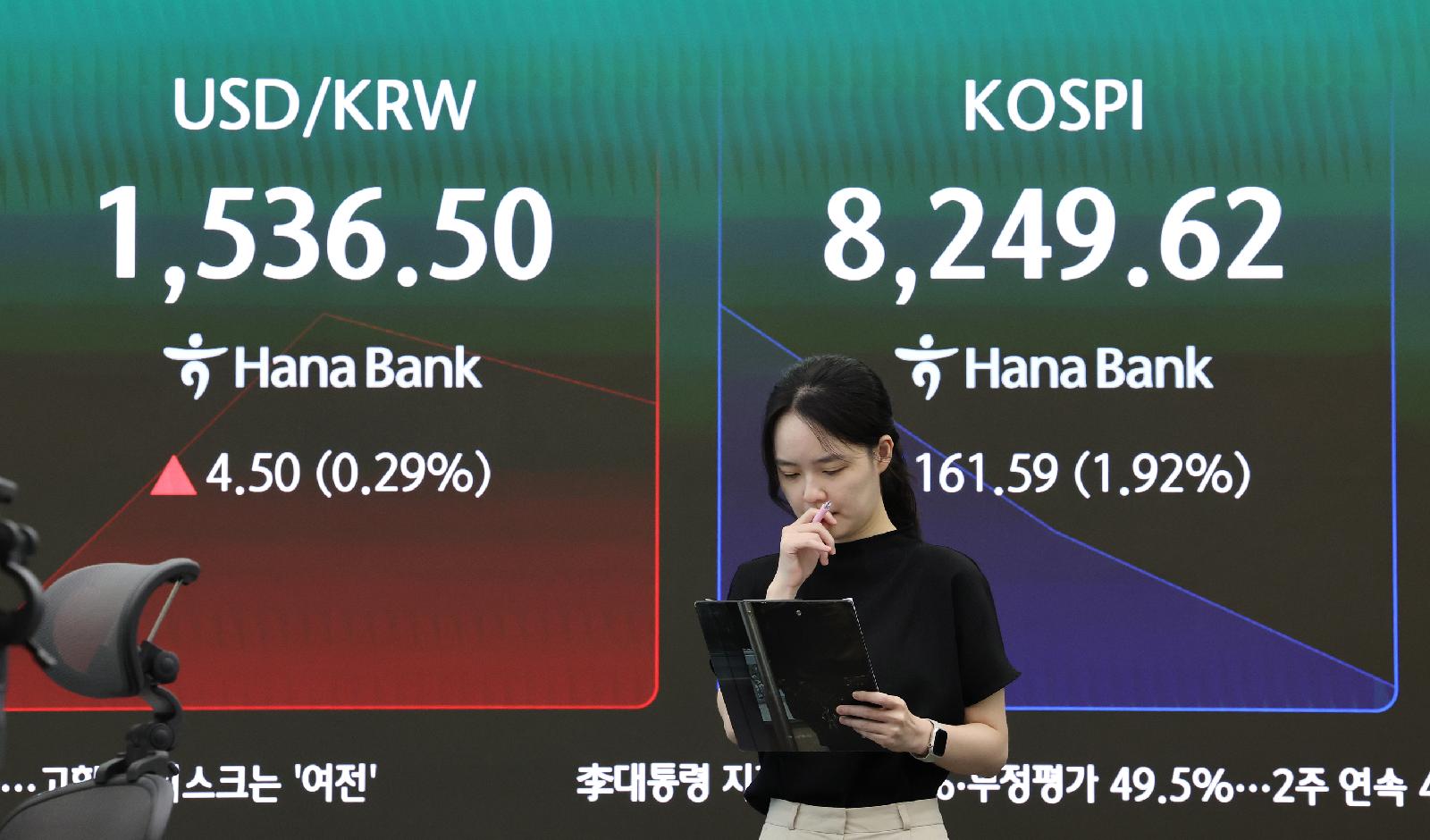
The KOSPI 200 Volatility Index, widely called VKOSPI, climbed to a record-level intraday high on the 29th. The move reflected a rapid shift toward risk avoidance as tension between the United States and Iran intensified. Sentiment toward semiconductor shares, a central pillar of the Korean equity market, also weakened, amplifying volatility across the KOSPI.
Geopolitical Risk Reaches Seoul
The jump in VKOSPI shows that Middle East risk is no longer a distant variable for Korean investors. U.S.-Iran tension can affect oil prices, the U.S. dollar, and the Korean won. Because South Korea depends heavily on energy imports and export manufacturing, higher geopolitical pressure can raise corporate costs and currency risk at the same time.
Semiconductor stocks are especially sensitive. The sector is tied to global supply chains, dollar settlement, and overseas demand. When geopolitical stress rises, foreign fund flows and valuation confidence can weaken together. That made chip shares a key channel through which fear spread across the broader market.
VKOSPI Jumps More Than 5%
VKOSPI measures expected future volatility implied by KOSPI 200 options. A higher reading means investors are pricing in a greater chance of sharp market swings. On the 29th, the index rose more than 5% intraday and reached a record-level zone. The move points to stronger hedging demand, defensive positioning, and short-term selling pressure.
For retail investors in Korea, won-based returns can become more unstable when global tension lifts the dollar. A weaker won may increase pressure on foreign flows and large-cap shares. Investors using margin loans or leveraged exchange-traded products can face losses larger than the index move, making collateral ratios and stop-loss rules more important.
Outlook Stays Defensive
The next phase depends on whether U.S.-Iran tension escalates further, how oil prices move, and whether foreign investors continue to sell or hedge major semiconductor names. If geopolitical pressure eases, VKOSPI could retreat quickly. If tension lasts, a high-volatility market is likely to continue.
Near term, attention is expected to shift toward companies with stable earnings forecasts and cash flow. Chip stocks still carry recovery hopes, but they can be among the first to swing when external shocks grow. The record-level rise in Korea’s fear index is less a signal to panic than a warning to manage position size, currency exposure, and leverage carefully.
Key points
- The KOSPI 200 Volatility Index, known as Korea’s fear index, climbed to a record-level intraday high on the 29th. Rising U.S.-Iran tension weakened risk appetite, while semiconductor shares faced fading investor confidence. The index rose more than 5%, signaling sharper short-term stress in Korean equities.
- Use the body and FAQ context before acting on this update.
- Compare with related issues inside the category hub.
FAQ
What is VKOSPI?
VKOSPI is the KOSPI 200 Volatility Index, a gauge of expected market swings implied by options prices and often called Korea’s fear index.
Why did VKOSPI jump on the 29th?
It rose as U.S.-Iran tension increased risk aversion and sentiment weakened toward semiconductor shares, a core sector of the Korean market.
What should investors watch now?
Investors should monitor the won-dollar exchange rate, oil prices, foreign fund flows, and leverage exposure.
Latest stories
KOSPI tumbles 5.81% to 8,411.21 as AI investment slowdown fears hit Seoul stocks
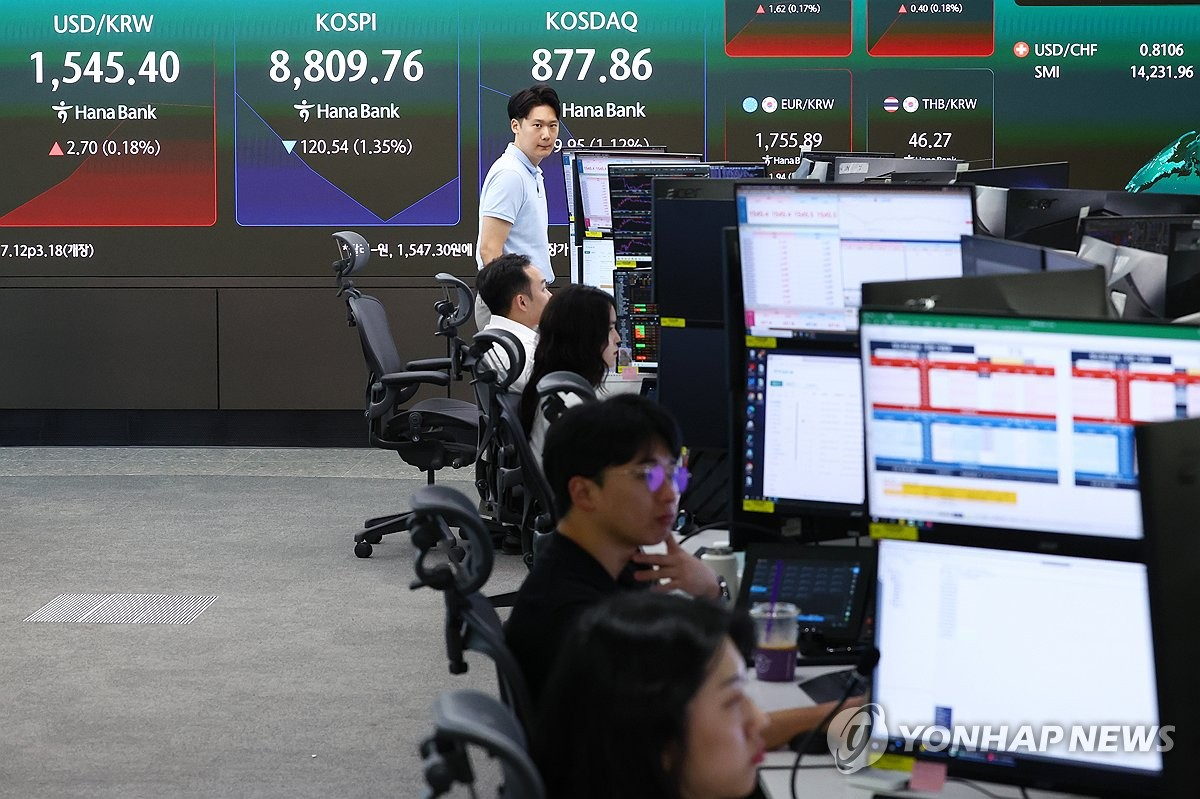
The KOSPI closed at 8,411.21 on the 26th, down 519.09 points from the previous session. A 5.81% drop reflected rising risk aversion tied to concerns that the AI investment cycle may slow. Large-cap technology and growth stocks led the selloff. Investors are now focused on earnings guidance and foreign fund flows.
KOSPI retreats to 8,400 as foreign and institutional selling revives circuit-breaker fears
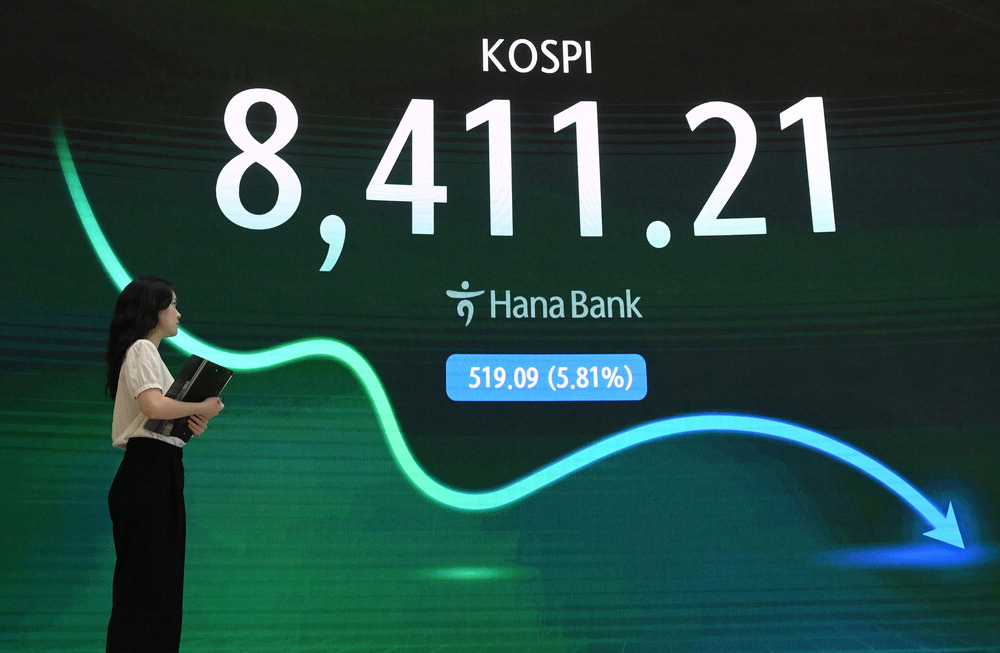
The KOSPI retreated to the 8,400 level on the 26th under simultaneous selling by foreign and institutional investors. The previous day’s gain of more than 5%, fueled by Micron’s surprise earnings, quickly lost momentum. Semiconductor optimism remained, but profit-taking and risk aversion revived circuit-breaker concerns.
Korean Retail Investors Rush Into 3x Chip ETFs and Micron
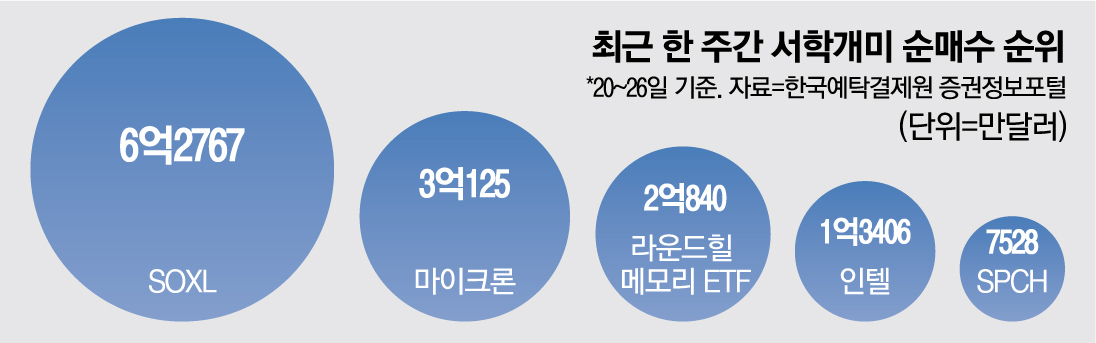
Korean overseas-stock investors used the latest semiconductor pullback to build risk-on positions. Capital flowed into 3x leveraged chip ETFs, Micron and memory-focused funds. Currency swings and leverage decay remain key risks for won-based investors.
Korean Retail Investors Exit SpaceX Gains and Return to 3x AI Chip Bets
Korean retail money is rotating from space growth exposure back into AI semiconductors. About $70 million in SpaceX-related holdings was sold, while weekly buying of SOXL reached around 1 trillion won. The move highlights renewed appetite for high-risk leveraged chip trades.
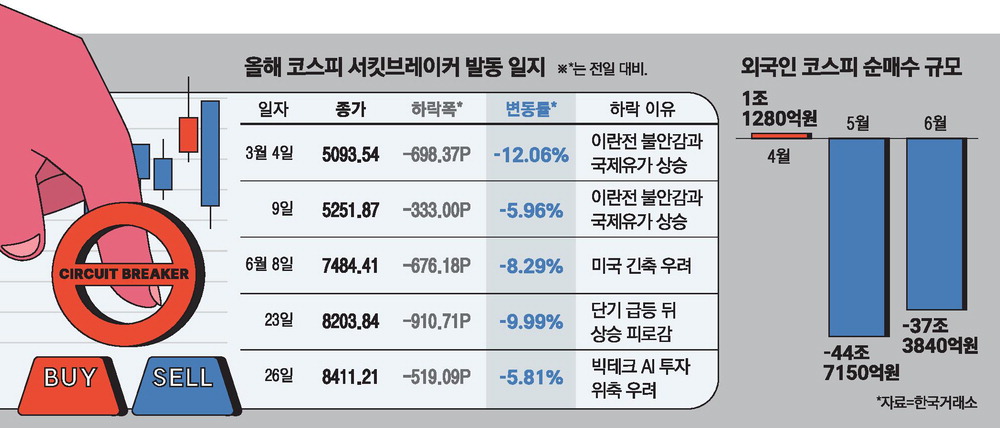
KOSPI Sinks as AI Investment Fears and Apple Price Hike Rattle Memory Demand
The KOSPI dropped nearly 6% on the 26th under heavy selling by foreign and institutional investors. Apple’s expected product price increases raised concerns that consumer replacement demand could slow, pressuring memory semiconductor orders. Korean chip and technology shares now face renewed valuation pressure tied to AI investment expectations.
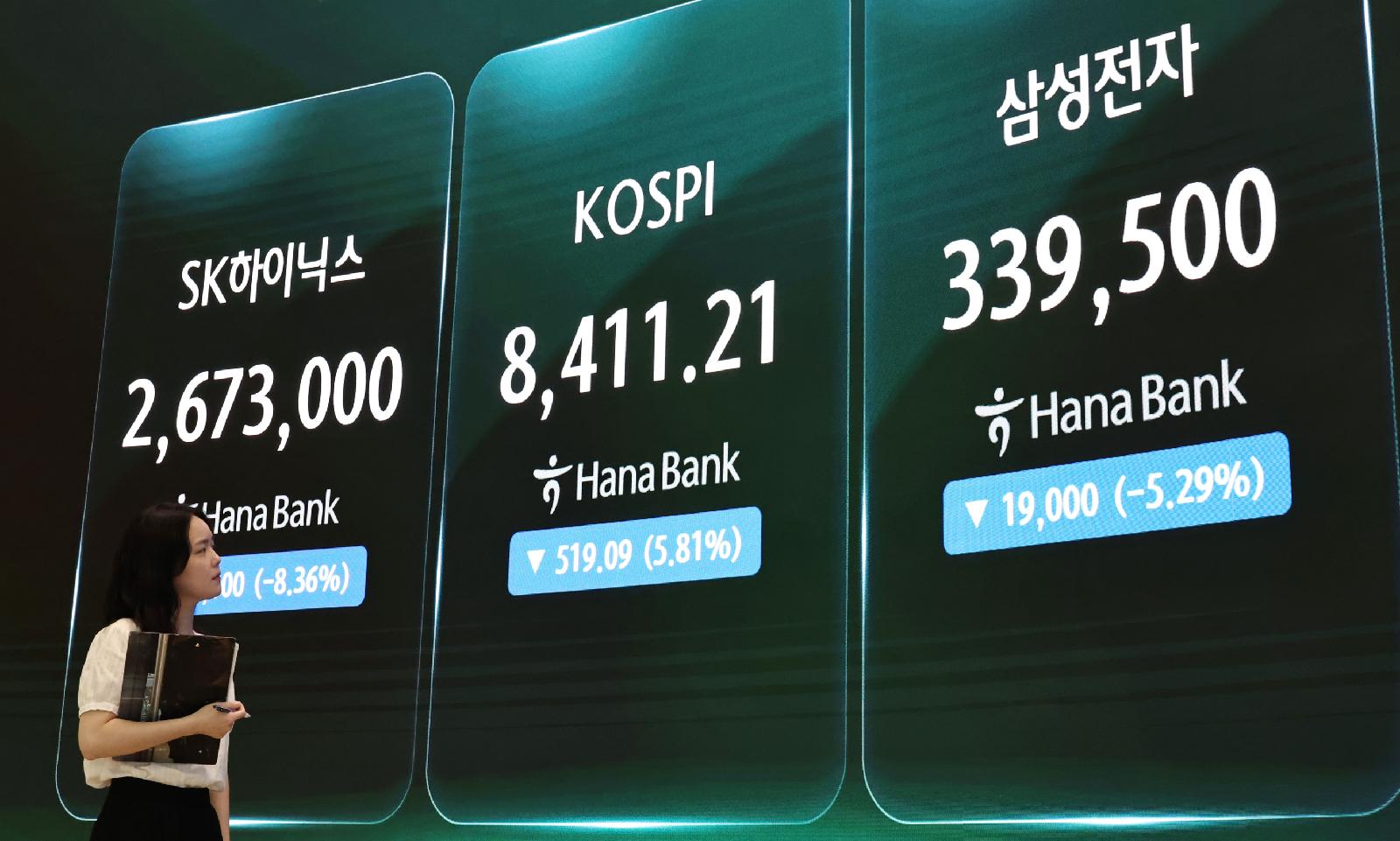
KOSPI 150x and Samsung-SK Hynix 50x Leverage Ignite Korean Stock Futures Debate
Highly leveraged Korean equity futures have put investor protection back in focus. KOSPI-linked products can reach 150x leverage, while Samsung Electronics and SK Hynix products can reach 50x. Domestic investors appear to be using overseas access routes as semiconductor optimism fuels speculative demand.
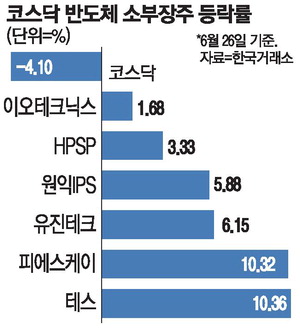
KOSDAQ chip materials and equipment shares extend solo rally as institutions buy
KOSDAQ semiconductor materials, parts and equipment stocks outperformed during a broad market pullback. Profit-taking weighed on large chipmakers, but institutional money moved into supply-chain companies. Investors are watching second-round beneficiaries of a semiconductor recovery and Korea’s localization trend.
KOSPI Rally Raises False-Rally Warning as ETFs, Blue Chips and Dividends Flash Risks
The KOSPI’s advance does not fully reflect the health of the broader market. Three warning signs stand out: more falling stocks than rising ones, ETFs drifting away from fair value, and blue-chip shares turning into speculative trades. Even 5% dividend yields are being overlooked as short-term momentum dominates.